


Fungal infection is considered a common disease of our time.According to statistics, 20% of the world's population is susceptible to diseases.At first, the disease develops slowly, without foreshadowing any problems.Then the complications associated with serious skin diseases begin that can quickly spread throughout the human body without stopping at the legs.The treatment of cutaneous fungi, despite its complexity, remains a priority in dermatology.
Symptoms
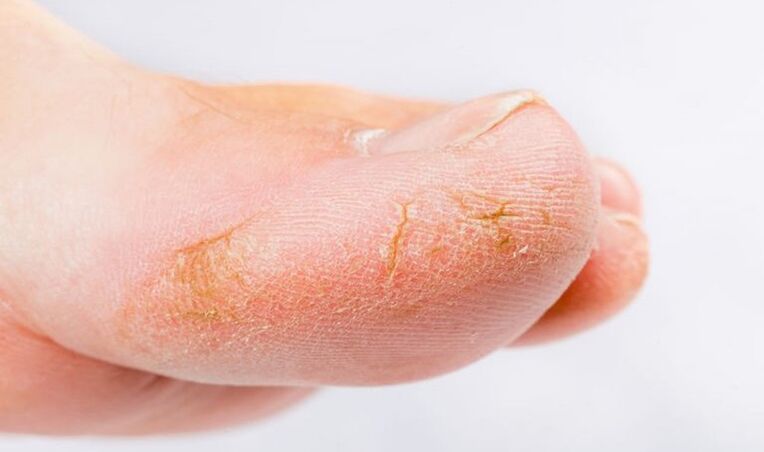
It is not difficult to notice the penetration of the disease into the body.If you regularly monitor the condition of your own legs.Dermatologists highlight a list of symptoms that indicate infection:
- Slight redness of the skin in the affected area;
- Dying of the affected skin, expressed through white lines and peeling;
- Itching and burning appear on the feet, especially in places where the integument has died;
- The appearance of cracks between the toes.
Fungus on the skin of the legs in the first stage is not characterized by swelling, pain when walking and other unpleasant sensations - excluding areas of disease progression.You need to be careful with the affected skin and wear comfortable shoes.
Diagnosis
To ensure the presence or absence of fungi, it is best to consult a doctor.A dermatologist will examine your feet and confirm or deny suspected disease.If external signs (skin redness, cracking) suggest a fungus, a list of diagnostic procedures is prescribed.
To find out an accurate diagnosis, you will have to undergo a series of tests.
Fungus treatment
Remember, when treating a fungal infection, you need to take care of your feet, paying special attention to the skin.Doctors prescribe a variety of medications for oral administration and recommend various ointments based on medicinal herbs.The use of traditional medicine is allowed - treatment with celandine oil is considered an effective way to get rid of the fungus.
The herbs are crushed in small foot baths.The healing properties spread well in liquids at high temperatures;The benefits of daily bathing are undeniable.Treatment with tinctures of hot water and leaves of various flowers: violet, chamomile and string is considered useful.Try bathing and steaming your feet, lubricating them with medicinal oil after the procedure.
Fungus treatment is an area of medicine where unconventional skills are acceptable, but a professional's opinion should not be forgotten.After analyzing the patient's tests, taking into account individual characteristics (for example, allergies to selected medicinal substances), the dermatologist will prescribe the correct course and carry out treatment together with the patient.
Prescription medication is common for infections.A variety of ointments and other external products are responsible for ridding the skin of fungi;the internal state of the body will have to be taken care of separately.The infection can spread throughout the body, starting with the legs.
Causes of the fungus
The main reason for the formation of fungus on the skin of the feet is an infection that has entered through certain cracks, abrasions and other irregularities that have appeared on the feet.The disease can hide anywhere and spreads well in water.When visiting the pool, it is mandatory to wear rubber flip-flops.Similar advice applies to saunas and public baths.
An additional cause of fungal skin infections is flat feet and insufficient care.For example, after swimming, moisture remains on the feet, creating a breeding ground for infections to develop.If the skin on the feet is dry and lacking hydration, the process is repeated.Flat feet are already classified as a risk group on the list of vulnerability diseases.
Newborn children whose immunity has not yet developed to an optimal level are at risk of becoming infected due to hereditary predisposition.Treating childhood fungus is even more difficult;Not all medicines suitable for adults are suitable for children.If the disease develops before the age of two, treatment is exclusively supportive: doctors wait until the required age of two years to begin full recovery from the disease.
More often, fungus on the skin of the legs bothers people who perform activities mainly while standing.To avoid infections, it is recommended to regularly shift your weight from one foot to the other and, if possible, stretch.
Prevention
When the disease passes, it will be necessary to take a series of preventive measures aimed at restoring damaged skin on the legs and protecting against possible external manifestations.Remember, since the affected skin becomes a magnet for new infection, the covering must be protected.
Measures to prevent disease relapse:
- Once the treatment is finished, the shoes must be disinfected;Infectious spores can remain inside, which can cause the disease again.You should consult your doctor about suitable shoes.It is necessary that during the walk your legs are free and breathe openly, reducing the risk of getting sick.The material of the shoes are natural fabrics without chemical impurities, varnishes and other things harmful to health.
- You can't wear someone else's shoes!This often applies to (at risk) children who try on other people's shoes as a joke.There may be fungal spores on the feet of the person wearing the shoes, infecting the child's foot.The infection thrives in moist environments;shoes constantly release sweat from the feet, creating an unhealthy atmosphere and closed space.Among other things, shoes must be comfortable, not exert pressure, and not squeeze areas of the skin: the more damaged the skin is, the greater the opportunity for the fungus to penetrate inside and remain on the feet.
- The above applies to trying on shoes in a store - before putting them on, it is better to buy special socks.Do not wear barefoot shoes.
- While you're in the pool, don't forget your rubber flip-flops;in a humid environment, the disease spreads several times faster and cleaners do not always consider it necessary to disinfect the pool and sides.
Fungus treatment is a long and laborious process;It is better to prevent the disease in advance.Although the treatment procedures do not involve painful activities, the patient's life changes radically when he needs to take medication regularly and apply compresses to the skin.
Consequences
If the fungus is not treated, the disease will not go away on its own.If treatment is delayed, the disease will spread from the finger to the nails, the affected nail is worse than the affected skin, much more unpleasant.Spots of various colors appear on the nail plates, ranging from white to yellow;Removing the nail will be a painful procedure.Certain types of fungus can spread through the legs, reaching the knee and shin.
The prospects are unpleasant;Fungus on the skin of the feet needs to be treated without delaying a visit to the doctor.